
Release time: 2026-02-28 Number of views: 684
ARM-based embedded boards are playing a growing role in modern medical devices, moving from simple control units to core computing platforms in imaging, in‑vitro diagnostics and therapy equipment. For manufacturers, they offer a practical combination of low power consumption, high integration and long-term supply that matches the stability and certification requirements of medical electronics.
As more hospitals and labs upgrade to digital and networked equipment, many device makers are moving away from traditional PC-based solutions toward ARM-based embedded platforms for their main control systems. In real projects, ARM boards are commonly found inside nucleic acid extractors, chemiluminescence analyzers, biochemical and hematology analyzers, autorefractors and ventilators. In these devices, the board usually handles a mix of tasks: sensor data acquisition, motor and actuator control, local data processing, human–machine interaction and communication with hospital information systems.
For in‑vitro diagnostic analyzers, an embedded ARM board typically needs multiple serial ports for modules, Ethernet for LIS/HIS connectivity, USB for accessories such as barcode scanners and printers, and reliable storage for test records. In ventilators and monitoring systems, developers care more about real‑time response, stable operating systems and clear waveform display, while still needing compact size and fanless operation for reliability. These are scenarios where an ARM-based embedded board is a natural fit.
In laboratory and diagnostic instruments, ARM core boards are used to connect pumps, valves, optical modules and sensors while driving local touchscreens. A typical layout is: the ARM board runs the main control software and user interface, while dedicated boards or modules handle high‑voltage or analog front‑ends. This separation helps with both safety and maintenance.
In life-support and monitoring devices, ARM-based boards are often responsible for user interface logic, alarm handling and communication, and may work together with microcontrollers that cover the most time‑critical safety functions. This combination allows manufacturers to run a modern graphical UI and network stack on the ARM platform while keeping core safety loops simple and robust.
For diagnostic terminals such as autorefractors or portable analyzers, ARM SoMs provide enough computing power for image processing, data storage and local decision support, with the option to sync data to cloud platforms when needed. Here, size, power consumption and boot time are usually as important as raw performance.
EMBSoM provides ARM-based System‑on‑Module and single board computer products designed for use in industrial and medical devices. The portfolio includes platforms based on Rockchip RK3568, RK3566, RK3562 and similar SoCs, giving engineers a range of performance and power options for different classes of medical equipment.
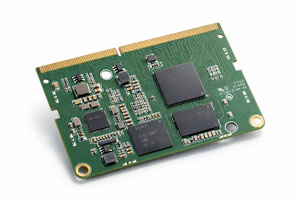
A typical EMBSoM Rockchip ARM board is built around a 64‑bit quad‑core Cortex‑A CPU and includes DDR memory, eMMC storage, power management and common interfaces on a compact core module. Paired with a carrier board, it can offer Gigabit Ethernet, multiple serial ports, USB, camera input and display outputs such as LVDS, MIPI or HDMI. In medical analyzers, this allows one board to support the user interface, instrument control and network connectivity without adding a separate PC.
Where graphics and visualization are important, such as on full‑color touch panels, ARM SoMs with Mali GPUs can drive modern UIs with smooth charts and waveforms. For projects that require AI features, such as basic anomaly detection or pattern recognition at the edge, NPUs integrated in Rockchip-based boards give developers a way to deploy lightweight models without changing the overall system architecture.
From a product lifecycle point of view, using a standardized ARM SoM also makes it easier to manage revisions. If performance or memory needs change over time, the module can often be updated with minimal changes to the carrier board and overall device design, helping reduce re‑certification effort.
The trend in medical equipment is moving from basic, stand‑alone systems toward intelligent and connected devices that can log data, support remote diagnostics and integrate into larger hospital networks. In this context, the main control platform in a device is expected to provide not only reliable control, but also enough computing power, graphics capability and flexible interfaces for future features.
ARM board solutions from EMBSoM are designed with these requirements in mind. By combining multi‑core processing, industrial‑grade design, rich I/O and a clear product roadmap, they offer a practical hardware foundation for medical device manufacturers who need to bring ARM-based medical equipment to market and keep it maintainable over many years.

Keep up with our evolving product features and technologies. Enter your email and subscribe to our newsletter.

Copyright © 2020 https://www.embsom.com/